
The world was shaken by news that many had been waiting years to hear: the real possibility that Nicolás Maduro may finally be held accountable. Beyond headlines, rumors, or interpretations, one thing became clear—the idea of his fall no longer seems impossible. And that alone changes everything.
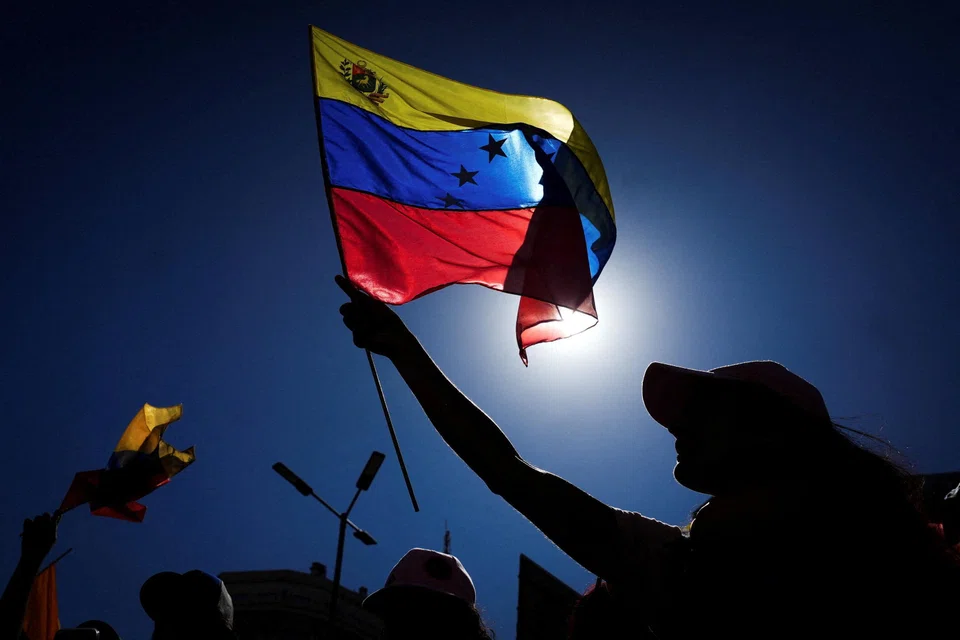
In Doral, at the heart of the Venezuelan exile community, the reaction was immediate. Streets filled with people, flags waving, tears and embraces everywhere. It was not a frivolous celebration; it was the release of a people who have carried years of pain, rage, and restrained hope. When a regime begins to tremble, the people feel it before any official statement is issued. I myself have witnessed thousands of Venezuelans crying with emotion. It’s simply moving.
For some time now, across multiple countries and international forums, a hard and undeniable consensus has been forming: this is not about xenophobia or political opportunism. It is about demanding accountability for systematic abuses of power and serious human rights violations documented for years under Maduro’s regime. The demand does not come from hatred, but from memory.
It did not take long for the reaction to come from Cuba. An awkward speech, a nearly empty platform, forced rhetoric. The nervousness was evident. When an allied regime starts to wobble, its accomplices do not reflect—they shout. They shout louder than the victims, because they understand something essential: examples are contagious.
A potential fall of Maduro’s regime would not be an isolated event. It would be a regional political earthquake. The first impact would be psychological. Regimes sustained more by fear than legitimacy would be forced to confront a simple truth: power is not eternal, and impunity has an expiration date. That symbolic blow is worth more than any sanction.
What would follow is a geopolitical realignment across Latin America. Governments, parties, and alliances would be forced to redefine their narratives, positions, and loyalties. The myth that authoritarian regimes “endure forever” would crack, opening space for transitions that are less ideological and more pragmatic.
In Cuba, the effect would be immediate and silent: internal fear. Not fear of invasion, but fear of precedent. Dictatorships do not fear armies—they fear the idea that another people achieved what once seemed impossible. Each foreign collapse weakens the fiction of absolute control that these regimes repeat to themselves. And perhaps most importantly, a contagious hope would spread among oppressed peoples—not a naïve hope, but a concrete one: the certainty that regimes fall, that history is not closed, and that freedom, however late, always finds cracks through which to enter.
As a Cuban, I can say this clearly: many celebrate quietly, inside their homes, with the caution learned through decades of repression. Because there is a real hope that a dictatorship of more than 67 years may also fall. And yes—I am among those who believe they have little time left.
Amid all of this, protests have emerged criticizing any action by United States and defending Maduro as a supposedly “legitimate” president. Who are these people? The usual ones: ideological ignorants, comfortable intellectuals who speak from free countries, with stable electricity, full supermarkets, and a guaranteed right to say nonsense without consequences.
They are the ones who never stood in line for food.
Who never traded dignity for rice.
Who never saw their mother cry because a child left and never returned.
From universities, literary cafés, and verified social media accounts, they defend dictatorships they would never survive living under. They speak of “imperialism” from democracies. Of “resistance” from armchairs. Of “sovereignty” while earning salaries in dollars or euros. They were never woken at five in the morning by a police summons. They never felt the real fear of speaking freely. They never saw a family member imprisoned for expressing an opinion. They never buried someone who died defending basic rights.
They carry no historical hunger.
They have no dead in their memory.
That is why they relativize repression. That is why they justify the unjustifiable. For them, dictatorship is a concept. For us, it was—and still is—an experience. They read reports. We lived funerals. For them, exile is a literary theme. For us, it was a poorly packed suitcase.
Those who have never lived under a dictatorship have no moral authority to defend one.
Those who have never lost anything cannot explain another people’s sacrifice.
And those who relativize the suffering of entire nations are not progressive—they are ignorant or morally indifferent.
History will not remember these comfortable intellectuals as brave thinkers, but as elegant accomplices to abuse. And when dictators fall—because they always do—they are the first to claim they “were never fully in agreement.”
The free world wants to see Maduro brought to justice not out of pleasure or revenge, but out of accountability: for human rights violations, extreme corruption, and the destruction of the rule of law. Because even absolute power must answer for the suffering it inflicts.
Freedom is not perfect. It is chaotic, uncomfortable, and demands responsibility and courage. But it allows choice, correction, dissent, and renewal. Dictatorship, on the other hand, never will be: it is born of fear, sustained by lies, and survives by crushing those who think differently.
That is why I admire freedom—not as a slogan, but as a principle. Because even wounded, it remains human; even fragile, it remains dignified. And when a dictator trembles, it is not only his power that cracks—people learn to walk, remembering that no regime is eternal and that history, sooner or later, returns to the side of those who refuse to give up being free.
 English
  Spanish